Some projects need power that just won’t fit into a conventional setup.
Remote worksites, industrial operations, temporary construction compounds, or off-grid living often demand equipment that’s grouped together, protected, and easy to move. That’s exactly where containerised power systems come into their own.
These aren’t just generators shoved into a metal box. A properly designed containerised system packages generation, storage, conversion, and control into a single transportable structure—usually a modified shipping container—that can be delivered, connected, and put to work with minimal on-site fuss.
When Containerisation Makes Real Sense
A containerised approach is worth serious consideration when a project needs:
- Equipment consolidated in one secure, weather-protected location
- Reliable power in remote or grid-absent sites
- A solution that can scale as demand grows
- Dedicated housing for sensitive electrical gear
- Integration of multiple technologies (solar, batteries, generators, inverters, and smart controls)
Think mining camps, civil construction sites, temporary site offices, remote agricultural operations, telecommunications infrastructure, or sustainable off-grid properties. In these environments, traditional fixed installations can be slow, expensive, or simply impractical. A container arrives largely pre-built and factory-tested, ready for rapid deployment.
Why the Project Requirements Always Come First
A container should never be chosen just because it looks convenient. The system has to be engineered around the actual job. Key factors include:
- The electrical loads that need to be served (peak and continuous)
- Available generation sources (solar, diesel, hybrid, or grid connection where it exists)
- Battery storage capacity and autonomy requirements
- Site conditions—temperature extremes, dust, humidity, altitude, or corrosive environments
- Specific equipment needs (inverters, switchgear, cooling, fire protection)
- Monitoring, control, and remote access capabilities
- Future expansion plans
Get these right and the container becomes a reliable, efficient power plant. Get them wrong and you end up with an expensive box that underperforms. Good design starts with a clear understanding of the energy profile and operating conditions, not with a catalogue photo of a shiny container.
What You Typically Get Inside
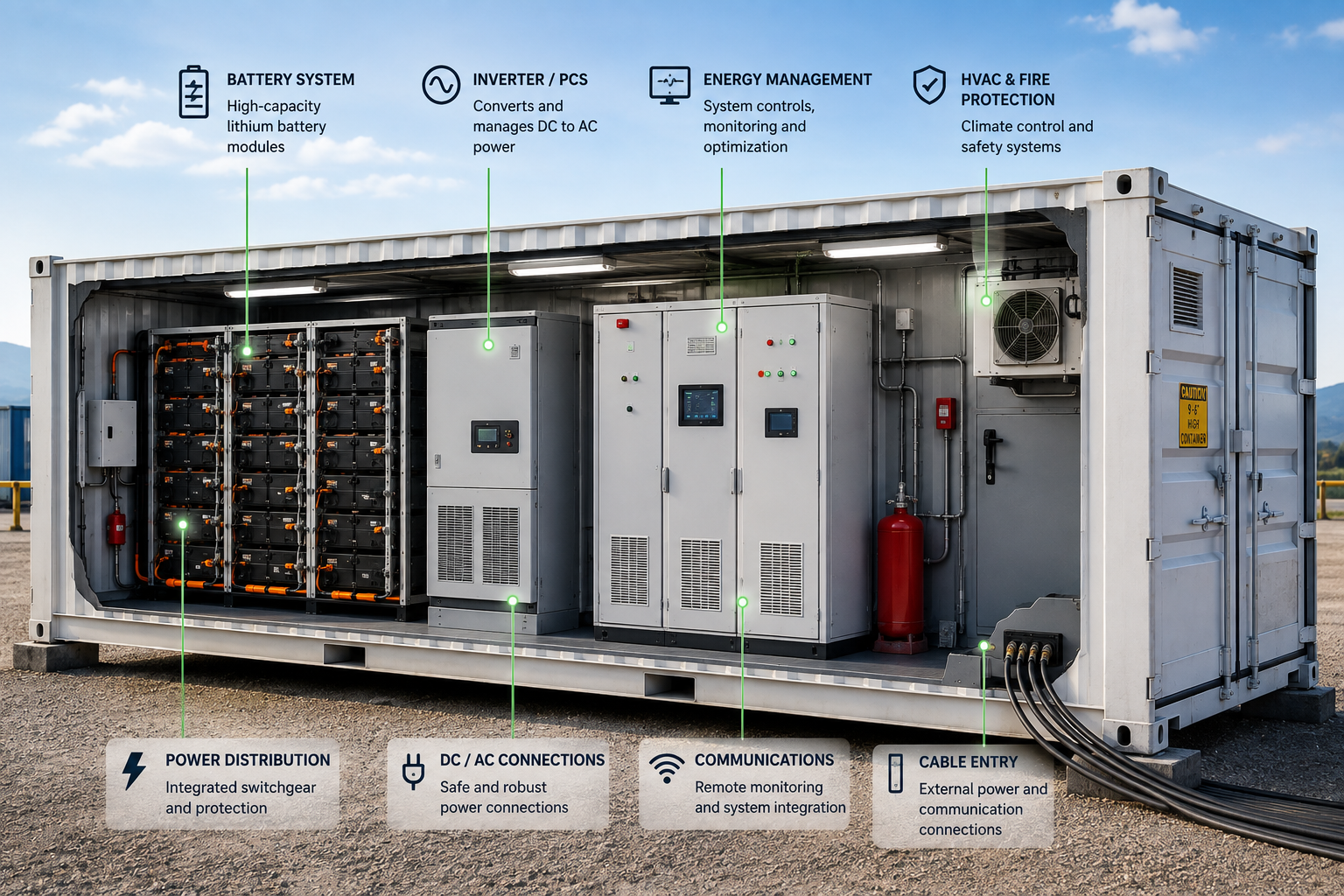
Modern containerised systems commonly combine:
- Solar generation (either mounted on the container or as a separate array that feeds into it)
- Battery energy storage for overnight or cloudy-day supply
- Inverters and power conversion equipment
- Intelligent energy management that prioritises renewable power, optimises battery use, and can hybridise with generators when needed
- Climate control, security, and safety systems appropriate to the location
The exact configuration is tailored. One site might need a quiet, fully renewable setup for a remote office. Another might require a hybrid system that keeps heavy machinery running while still cutting diesel use dramatically.
The Practical Advantages
Speed is often the biggest win. Because most of the engineering and assembly happens in a controlled factory environment, on-site work is reduced to positioning, cabling, and commissioning. That means less disruption, fewer people on the ground, and faster power availability—especially valuable in remote or time-sensitive projects.
Transportability is another clear benefit. When the job finishes or the site moves, the whole power system can travel with it. Scalability works the same way: additional containers can be added later if loads grow.
There’s also the sustainability angle. Pairing solar and batteries inside (or with) the container can significantly reduce reliance on diesel generators, cutting both fuel costs and emissions. Many systems include remote monitoring so operators can keep an eye on performance without constant site visits.
Renostain’s Approach
Renostain provides Containerised Power Systems as part of its broader advanced energy solutions. Where it makes sense for the project, these systems sit comfortably alongside solar and renewable energy installations, battery storage, and energy management platforms.
The focus is always on matching the technology to the real-world requirements of the site rather than forcing a one-size-fits-all product. Whether the need is temporary construction power, a permanent remote installation, or a mobile office that has to keep running regardless of location, the starting point remains the same: understand the loads, the conditions, and the long-term goals first.
Containerised power isn’t a magic solution for every project. But when the site is remote, the timeline is tight, or the equipment needs to stay together and moveable, it can be one of the most practical and reliable options available.