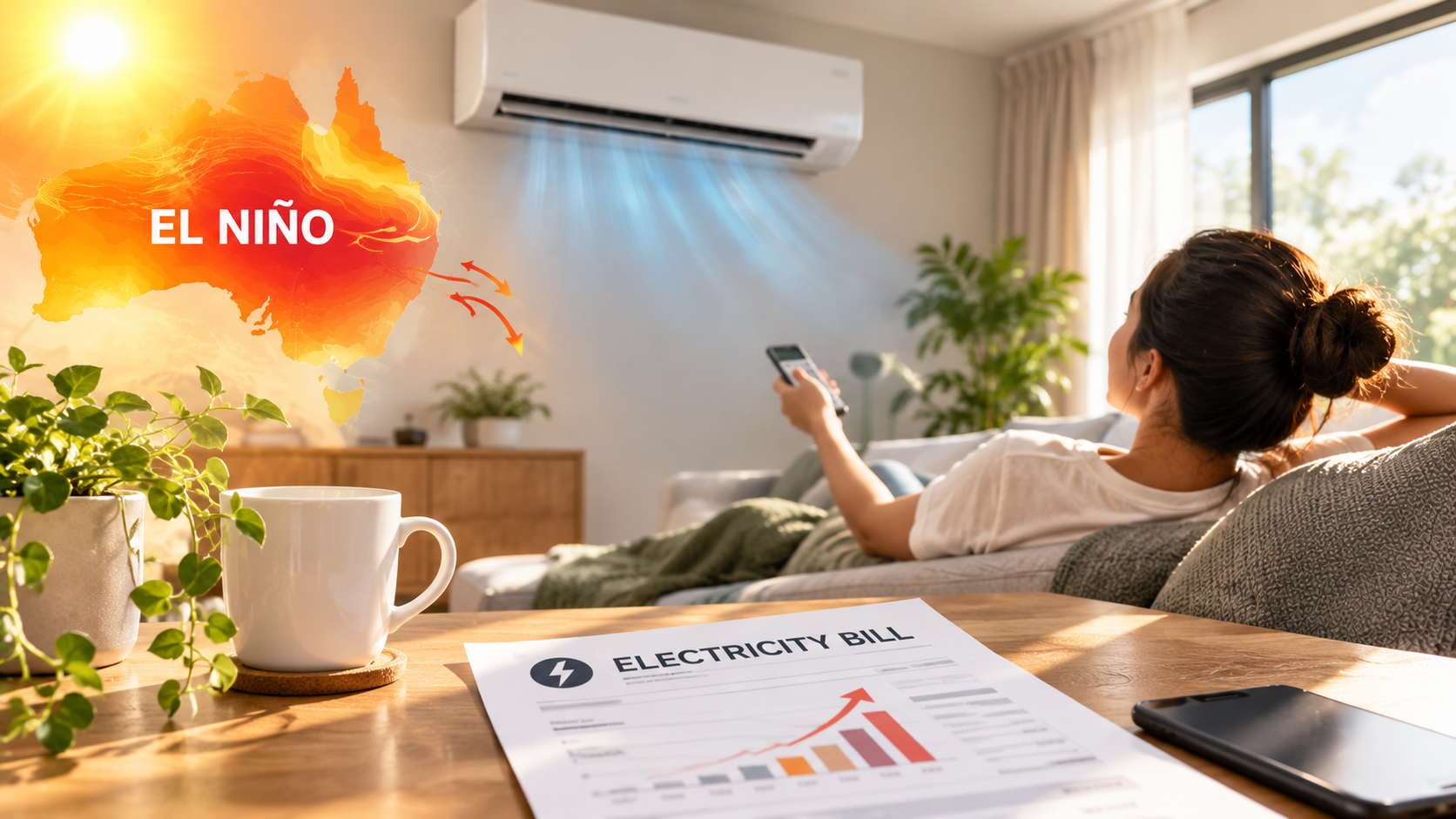
El Niño is firmly established and is expected to intensify into a very strong event in the coming months. According to the World Meteorological Organization (WMO), exceptionally warm ocean conditions across the tropical Pacific are expected to drive further strengthening, with the event potentially peaking towards the end of 2026 and its climate impacts continuing into 2027.
For Australia, El Niño is commonly associated with hotter and drier conditions in many areas. These changes can affect more than rainfall and temperature—they can also influence how much energy homes and businesses use.
How El Niño Can Affect Energy Use
Hotter weather often means greater reliance on air conditioning. During prolonged periods of high temperatures, households and businesses may run cooling systems for longer periods, increasing overall electricity consumption and contributing to higher demand during peak periods.
This makes energy efficiency and renewable energy particularly relevant during the warmer months.
El Niño and Solar Energy
El Niño does not necessarily mean poor conditions for solar power. Research into Australia's National Electricity Market (NEM) has found that solar generation can increase during the second half of an El Niño year, particularly in northern states.
Reduced rainfall can result in clearer skies and greater sunlight availability, creating favourable conditions for solar PV generation. However, the relationship varies by location, and El Niño alone cannot accurately predict future solar or wind generation.
For homeowners, the important consideration is how to make the most of the solar energy available while managing increased electricity demand.
Can Solar Help During Hot Weather?
Hot weather can create a useful overlap between solar generation and energy demand. Air conditioning is often used most heavily during the daytime, when solar panels are also producing electricity.
Using solar power directly can help reduce the amount of electricity a property needs to purchase from the grid. However, solar panels do not produce electricity after sunset, when cooling and other household loads may still be operating.
This is where battery storage can provide another option.
A solar battery can store excess energy generated during the day and make it available later when solar production falls. Combined with energy monitoring and efficient cooling, this can give households and businesses greater control over their electricity use.
How Heat and Dust Can Affect Solar Panels
While clearer skies can support solar generation, extreme heat can also affect panel performance. Solar panel efficiency generally decreases as cell temperatures rise above the standard reference temperature of 25°C.
Dry conditions can also lead to increased dust accumulation. When dirt and dust build up on panels, less sunlight can reach the photovoltaic cells, potentially reducing energy production.
Regular solar panel maintenance and performance monitoring can help keep a system operating effectively, particularly during extended periods of hot and dry weather.
Preparing Your Energy System
There are several practical ways to prepare for hotter conditions:
• Maintain your solar panels to minimise the impact of dust and debris.
• Monitor system performance so unusual changes in generation can be identified early.
• Use air conditioning efficiently and keep cooling equipment properly maintained.
• Consider battery storage if you regularly generate excess solar energy during the day.
• Explore energy management solutions to better understand and control electricity consumption.
Turning Forecasts into Early Action
El Niño itself is only a relatively weak predictor of future renewable energy conditions. Factors such as solar radiation, temperature, cloud cover and wind conditions have a more direct influence on renewable generation.
Rather than relying only on seasonal forecasts, homeowners and businesses can focus on what they can control: maintaining their systems, improving energy efficiency and choosing solutions that match their electricity needs.
With hotter conditions potentially increasing cooling demand, a well-planned energy system can help make better use of available renewable energy throughout the year.
Prepare Your Energy System with Renostain
Renostain provides solutions including solar and renewable energy, battery systems, air conditioning, solar panel maintenance and energy management for homes and businesses.
Whether you're looking to install solar, add battery storage or improve the performance of an existing system, Renostain can help you explore an energy solution suited to your needs.
Contact Renostain today to discuss your energy requirements.
For Australia, El Niño is commonly associated with hotter and drier conditions in many areas. These changes can affect more than rainfall and temperature—they can also influence how much energy homes and businesses use.
How El Niño Can Affect Energy Use
Hotter weather often means greater reliance on air conditioning. During prolonged periods of high temperatures, households and businesses may run cooling systems for longer periods, increasing overall electricity consumption and contributing to higher demand during peak periods.
This makes energy efficiency and renewable energy particularly relevant during the warmer months.
El Niño and Solar Energy
El Niño does not necessarily mean poor conditions for solar power. Research into Australia's National Electricity Market (NEM) has found that solar generation can increase during the second half of an El Niño year, particularly in northern states.
Reduced rainfall can result in clearer skies and greater sunlight availability, creating favourable conditions for solar PV generation. However, the relationship varies by location, and El Niño alone cannot accurately predict future solar or wind generation.
For homeowners, the important consideration is how to make the most of the solar energy available while managing increased electricity demand.
Can Solar Help During Hot Weather?
Hot weather can create a useful overlap between solar generation and energy demand. Air conditioning is often used most heavily during the daytime, when solar panels are also producing electricity.
Using solar power directly can help reduce the amount of electricity a property needs to purchase from the grid. However, solar panels do not produce electricity after sunset, when cooling and other household loads may still be operating.
This is where battery storage can provide another option.
A solar battery can store excess energy generated during the day and make it available later when solar production falls. Combined with energy monitoring and efficient cooling, this can give households and businesses greater control over their electricity use.
How Heat and Dust Can Affect Solar Panels
While clearer skies can support solar generation, extreme heat can also affect panel performance. Solar panel efficiency generally decreases as cell temperatures rise above the standard reference temperature of 25°C.
Dry conditions can also lead to increased dust accumulation. When dirt and dust build up on panels, less sunlight can reach the photovoltaic cells, potentially reducing energy production.
Regular solar panel maintenance and performance monitoring can help keep a system operating effectively, particularly during extended periods of hot and dry weather.
Preparing Your Energy System
There are several practical ways to prepare for hotter conditions:
• Maintain your solar panels to minimise the impact of dust and debris.
• Monitor system performance so unusual changes in generation can be identified early.
• Use air conditioning efficiently and keep cooling equipment properly maintained.
• Consider battery storage if you regularly generate excess solar energy during the day.
• Explore energy management solutions to better understand and control electricity consumption.
Turning Forecasts into Early Action
El Niño itself is only a relatively weak predictor of future renewable energy conditions. Factors such as solar radiation, temperature, cloud cover and wind conditions have a more direct influence on renewable generation.
Rather than relying only on seasonal forecasts, homeowners and businesses can focus on what they can control: maintaining their systems, improving energy efficiency and choosing solutions that match their electricity needs.
With hotter conditions potentially increasing cooling demand, a well-planned energy system can help make better use of available renewable energy throughout the year.
Prepare Your Energy System with Renostain
Renostain provides solutions including solar and renewable energy, battery systems, air conditioning, solar panel maintenance and energy management for homes and businesses.
Whether you're looking to install solar, add battery storage or improve the performance of an existing system, Renostain can help you explore an energy solution suited to your needs.
Contact Renostain today to discuss your energy requirements.