Electrical equipment supports many essential business operations, from data processing and communications to manufacturing and building management. When a fire occurs in these environments, the consequences can extend beyond the immediate damage.
Sensitive electronic components may be affected by heat, smoke and extinguishing agents. Equipment failure can also interrupt services, delay production and create costly recovery work.
For this reason, fire suppression needs to be considered alongside early detection, electrical safety and the operational importance of the equipment being protected.
Why Electrical Environments Require Special Consideration
Electrical fires can originate from several sources, including damaged wiring, overloaded circuits, loose connections, component failures and overheating equipment. Poor ventilation, dust accumulation and inadequate maintenance may also contribute to certain risks.
The environment can make the response more complicated. For example, a fire inside a server room may threaten critical data infrastructure, while a fire involving industrial control equipment could interrupt an entire production process.
Water, foam or powder-based extinguishing agents may be appropriate for certain fire hazards, but their suitability must be assessed carefully around energised equipment and sensitive components. Some agents can leave residue or create additional cleaning and restoration requirements.
The objective is to select protection that addresses the actual fire hazard while minimising unnecessary risks to people and equipment.
Which Areas May Need Dedicated Protection?
Different electrical environments have different protection requirements.
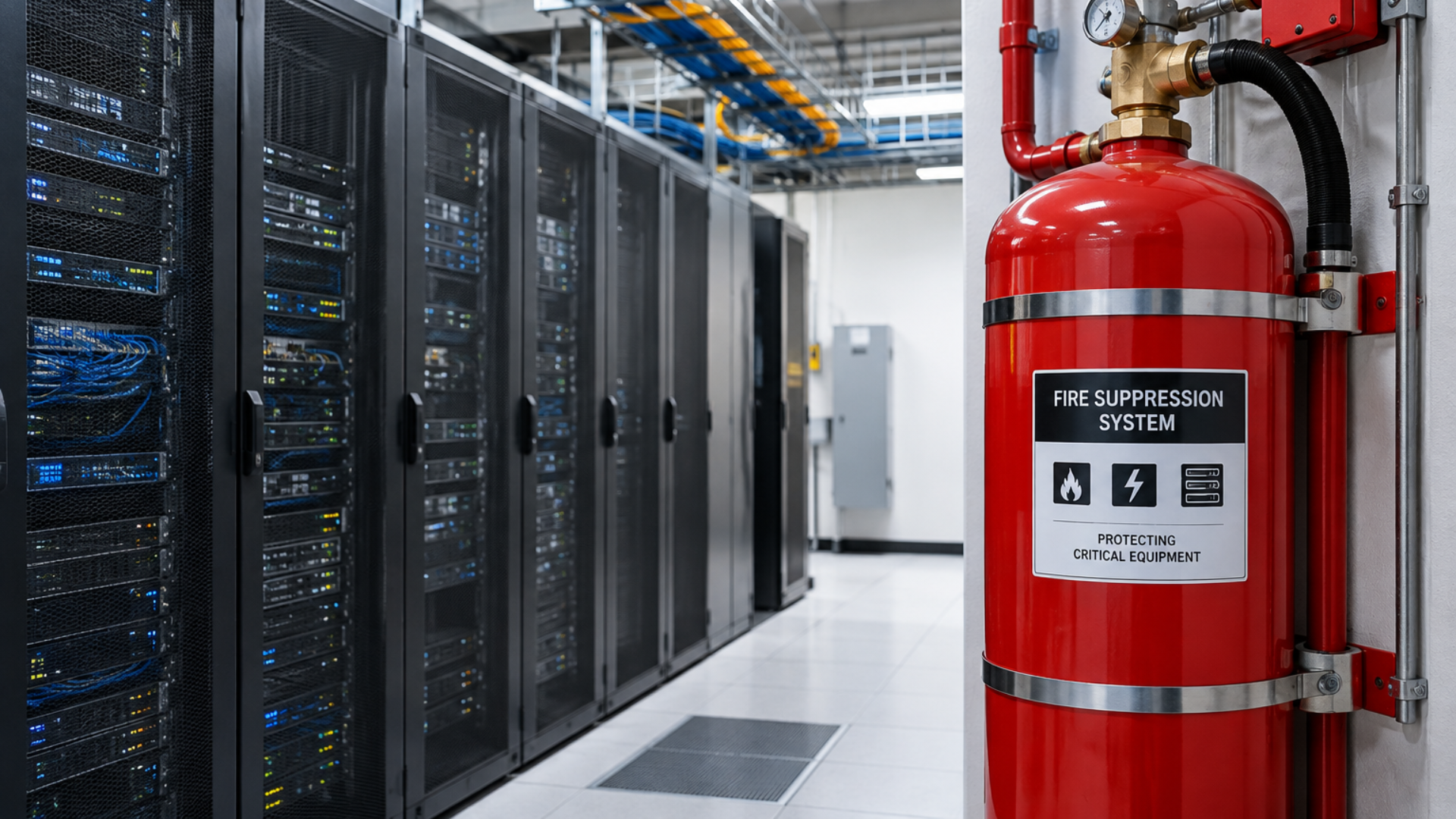
Server rooms and data facilities contain equipment that may need to remain operational for essential business functions. Early detection and carefully selected suppression can help reduce damage and downtime.
Electrical switchboards and distribution rooms may contain components capable of producing electrical faults and localised overheating. The design should consider the equipment configuration, available space and electrical hazards.
Industrial control cabinets can support manufacturing processes, building automation and critical machinery. Protection requirements may depend on the enclosure, surrounding environment and consequences of equipment failure.
Battery energy storage areas need particular attention because lithium-ion battery incidents can involve thermal runaway and the possibility of re-ignition. These hazards may require specialised detection, separation, cooling and emergency response provisions rather than reliance on a conventional room suppression system alone.
Understanding the Main Fire Suppression Options
Clean-agent suppression systems are often considered for enclosed spaces containing sensitive electronics. Depending on the selected agent and system design, they can suppress suitable fires without leaving the type of solid residue associated with some conventional extinguishing agents.
However, clean-agent systems are not interchangeable. Their effectiveness depends on the fire class, enclosure integrity, concentration requirements, detection arrangements and other design factors.
Water-based systems, including appropriately designed sprinkler or water-mist systems, may be suitable for particular applications. Their use must be assessed against the relevant hazards and applicable standards rather than dismissed simply because electrical equipment is present.
Portable extinguishers can also form part of a wider fire safety strategy, provided the extinguisher type is suitable for the identified hazard and users are trained to respond safely.
Detection and Occupant Safety Matter Just as Much
Suppression equipment cannot provide effective protection if a fire is detected too late. Appropriate smoke, heat or other detection technologies can help identify developing incidents and initiate the required response.
For enclosed systems, the design may need to include alarms, discharge warnings, suitable delays where required, emergency shutdown arrangements and ventilation controls. Occupant safety is especially important when a suppression agent can create hazardous conditions at certain concentrations.
Businesses should also establish procedures for evacuation, emergency services access and restoring equipment after an incident.
Planning for Compliance and Ongoing Maintenance
Before installing a system, identify the protected equipment, the room's construction, likely ignition sources and the operational consequences of a fire. A qualified fire protection professional can then assess the appropriate design and applicable requirements.
The installation should be inspected, tested and maintained according to the system specifications and relevant regulations. Detection devices, alarms, cylinders, control panels and other components may need periodic checks to confirm that they remain operational.
Protecting Equipment and Business Continuity
The right fire suppression system is part of a broader risk management strategy. Businesses should consider how a fire could affect people, electrical infrastructure, data, production and essential services.
A tailored assessment can help identify suitable protection without relying on a one-size-fits-all solution. By combining appropriate suppression with detection, safe operating procedures and regular maintenance, businesses can reduce risks and improve their ability to recover from a fire-related incident.