Fire risks can vary significantly between commercial and industrial environments.
An office, warehouse, electrical room, plant room and industrial facility may all require different approaches to fire protection.
This is why fire suppression should be considered based on the specific risks and requirements of the site.
What Is Fire Suppression?
Fire suppression systems are designed to control or suppress fires using an appropriate extinguishing method.
The system selected depends on factors such as the environment, fire risk, equipment and applicable requirements.
Why One System Doesn't Suit Every Site Consider a facility containing:
• Electrical equipment
• Machinery
• Flammable materials
• Sensitive equipment
• High-value assets
• Specialised industrial processes
Each environment can present different fire risks.
The suppression strategy therefore needs to be based on the actual application.
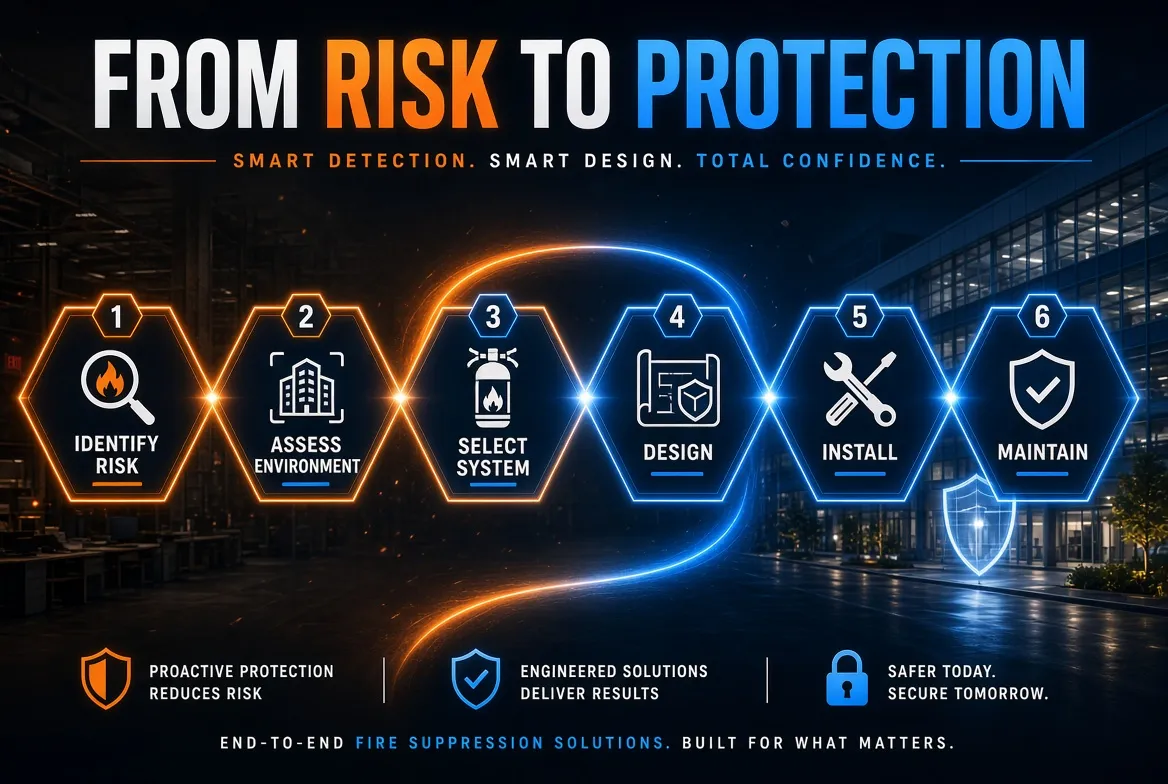
What Should Be Assessed?
Before selecting a system, consider:
Fire Risk
What could potentially cause or fuel a fire?
Environment
Where will the suppression system operate?
Equipment
What equipment needs protection?
People
How will the system affect occupants and emergency response?
Compliance
What building, fire safety and relevant standards apply?
Maintenance
What inspection, testing and ongoing requirements apply?
Fire Suppression and Electrical Infrastructure
Fire protection can be particularly important around electrical and energy infrastructure.
Where fire suppression forms part of a larger electrical or energy project, coordination between systems can help ensure that the overall design addresses the site's requirements.
Renostain Fire Suppression
Fire Suppression is part of Renostain's product offering, alongside its broader electrical and energy capabilities. For commercial and industrial projects, the appropriate solution should be determined according to the site's specific conditions and applicable requirements.
An office, warehouse, electrical room, plant room and industrial facility may all require different approaches to fire protection.
This is why fire suppression should be considered based on the specific risks and requirements of the site.
What Is Fire Suppression?
Fire suppression systems are designed to control or suppress fires using an appropriate extinguishing method.
The system selected depends on factors such as the environment, fire risk, equipment and applicable requirements.
Why One System Doesn't Suit Every Site Consider a facility containing:
• Electrical equipment
• Machinery
• Flammable materials
• Sensitive equipment
• High-value assets
• Specialised industrial processes
Each environment can present different fire risks.
The suppression strategy therefore needs to be based on the actual application.
What Should Be Assessed?
Before selecting a system, consider:
Fire Risk
What could potentially cause or fuel a fire?
Environment
Where will the suppression system operate?
Equipment
What equipment needs protection?
People
How will the system affect occupants and emergency response?
Compliance
What building, fire safety and relevant standards apply?
Maintenance
What inspection, testing and ongoing requirements apply?
Fire Suppression and Electrical Infrastructure
Fire protection can be particularly important around electrical and energy infrastructure.
Where fire suppression forms part of a larger electrical or energy project, coordination between systems can help ensure that the overall design addresses the site's requirements.
Renostain Fire Suppression
Fire Suppression is part of Renostain's product offering, alongside its broader electrical and energy capabilities. For commercial and industrial projects, the appropriate solution should be determined according to the site's specific conditions and applicable requirements.