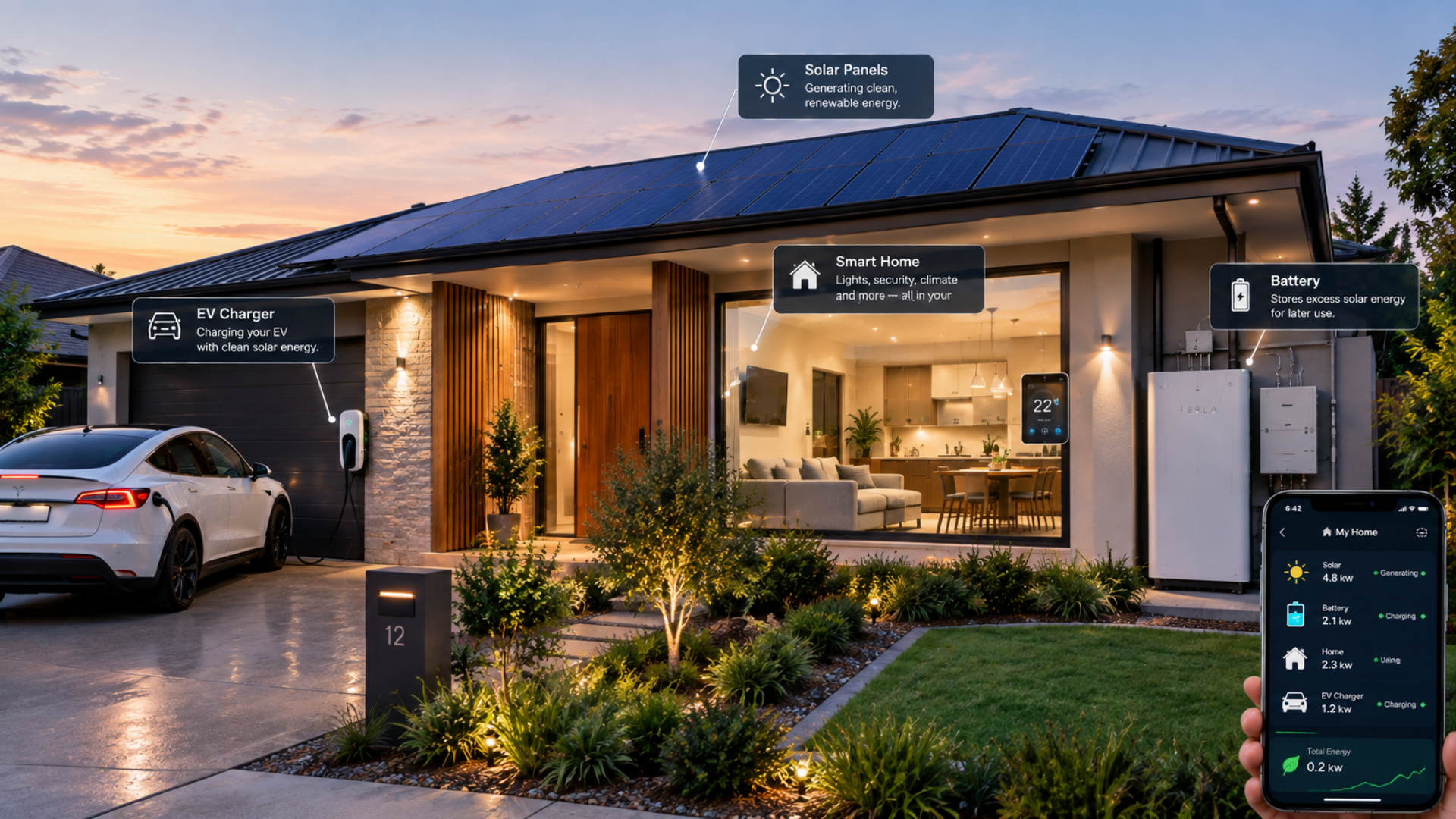
Going off-grid is more than simply installing enough solar panels to run a house during the day. An off-grid energy system needs to keep supplying electricity when the sun is not producing enough power, including at night, during periods of heavy cloud and during times of higher energy demand.
That is why solar panels, battery storage, energy management and backup power usually need to be considered together.
Start With How Much Energy the Property Actually Uses
The right size of an off-grid system depends heavily on the property's electricity consumption.
A small rural property with a refrigerator, lighting, internet equipment and a few appliances will have very different requirements from a larger home running air conditioning, pumps, electric hot water, workshop equipment or agricultural machinery.
Looking only at the number of solar panels can therefore give an incomplete picture.
A proper system assessment should consider daily electricity consumption, peak loads, seasonal changes and which appliances are likely to operate at the same time.
Solar Power Is Only Part of the System
Solar panels generate electricity when sunlight is available. The challenge for an off-grid property is what happens when solar production drops.
This is where battery storage becomes important.
Australian guidance notes that off-grid systems commonly combine solar PV, batteries, energy management and conversion equipment, with generators often included as backup.
What Happens During Several Cloudy Days?
This is one of the most important questions when designing an off-grid system
A system that works perfectly on a sunny day may have very different performance during several days of low solar generation.
Battery capacity therefore needs to be considered alongside solar generation and expected energy demand. For some properties, a backup generator may also form part of the overall system.
The goal is not simply to install the biggest battery possible. The system needs to be designed around the property's actual loads and operating conditions.
Remote Properties Need a Different Approach
For farms, remote homes, mining-related facilities and rural businesses, reliability can be just as important as energy cost.
A well-designed off-grid solution can coordinate solar generation, battery storage and backup generation so the available energy is managed according to demand.
For a remote property, the right question is not simply “How many panels do I need?”
It is:
“How should the entire energy system work when grid power isn't available?”
Renostain can assess the property's requirements and develop an energy solution around the site's energy use, available generation and operating needs.
FAQ
Can a house run completely on solar?
Yes, some properties can operate off-grid using solar, battery storage and appropriate backup systems. The design depends on the property's energy demand and location.
Do off-grid homes need batteries?
Battery storage is commonly used because solar generation does not continue at night and can fall during periods of low sunlight.
Do off-grid systems need a generator?
Not every system will require one, but backup generation can provide additional resilience for properties experiencing extended periods of low solar production.
That is why solar panels, battery storage, energy management and backup power usually need to be considered together.
Start With How Much Energy the Property Actually Uses
The right size of an off-grid system depends heavily on the property's electricity consumption.
A small rural property with a refrigerator, lighting, internet equipment and a few appliances will have very different requirements from a larger home running air conditioning, pumps, electric hot water, workshop equipment or agricultural machinery.
Looking only at the number of solar panels can therefore give an incomplete picture.
A proper system assessment should consider daily electricity consumption, peak loads, seasonal changes and which appliances are likely to operate at the same time.
Solar Power Is Only Part of the System
Solar panels generate electricity when sunlight is available. The challenge for an off-grid property is what happens when solar production drops.
This is where battery storage becomes important.
Australian guidance notes that off-grid systems commonly combine solar PV, batteries, energy management and conversion equipment, with generators often included as backup.
What Happens During Several Cloudy Days?
This is one of the most important questions when designing an off-grid system
A system that works perfectly on a sunny day may have very different performance during several days of low solar generation.
Battery capacity therefore needs to be considered alongside solar generation and expected energy demand. For some properties, a backup generator may also form part of the overall system.
The goal is not simply to install the biggest battery possible. The system needs to be designed around the property's actual loads and operating conditions.
Remote Properties Need a Different Approach
For farms, remote homes, mining-related facilities and rural businesses, reliability can be just as important as energy cost.
A well-designed off-grid solution can coordinate solar generation, battery storage and backup generation so the available energy is managed according to demand.
For a remote property, the right question is not simply “How many panels do I need?”
It is:
“How should the entire energy system work when grid power isn't available?”
Renostain can assess the property's requirements and develop an energy solution around the site's energy use, available generation and operating needs.
FAQ
Can a house run completely on solar?
Yes, some properties can operate off-grid using solar, battery storage and appropriate backup systems. The design depends on the property's energy demand and location.
Do off-grid homes need batteries?
Battery storage is commonly used because solar generation does not continue at night and can fall during periods of low sunlight.
Do off-grid systems need a generator?
Not every system will require one, but backup generation can provide additional resilience for properties experiencing extended periods of low solar production.