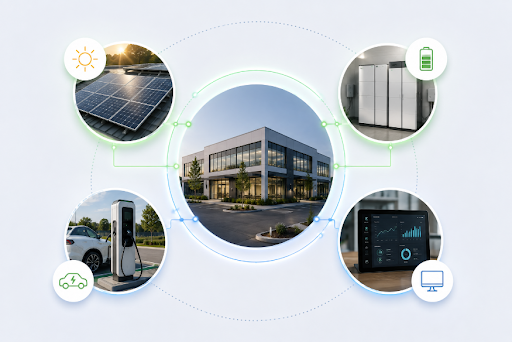
A business may start with solar.
Then add a battery.
Then the company begins transitioning its vehicles to EVs.
Suddenly, the property has three major energy technologies, each affecting the others.
This is where energy management becomes increasingly relevant.
The Solar System
Solar generates electricity when conditions allow.
The challenge is that generation and electricity demand don't always happen at the same time.
The Battery
A battery can store energy and make it available later.
This can help shift when generated electricity is used.
The EV Charger
EV charging creates another electricity demand.
If several vehicles charge at once, the site's electricity demand can increase significantly.
So Which System Gets Priority?
That's exactly the type of question an integrated energy strategy should address.
Rather than looking at:
Solar
Battery
EV charger
as three separate projects, the property can be assessed as one energy system.
This Is Where the Market Is Heading
Current Australian energy policy increasingly focuses on consumer energy resources working together, including solar, batteries, EVs, EV chargers and controllable appliances.
The growth of batteries also reinforces this shift: the Clean Energy Regulator reported that 71% of small-scale solar systems installed in Q1 2026 were being installed alongside batteries.
What Should a Business Consider?
Before adding another technology, consider:
Existing electricity demand
Solar generation
Battery capacity
EV charging requirements
Operating schedules
Future electrical loads
Energy monitoring
Available electrical infrastructure
Renostain's Integrated Approach
This is where Renostain's different capabilities can connect.
Together with Electrical Design, these services can support a more coordinated approach to a property's energy requirements.
Then add a battery.
Then the company begins transitioning its vehicles to EVs.
Suddenly, the property has three major energy technologies, each affecting the others.
This is where energy management becomes increasingly relevant.
The Solar System
Solar generates electricity when conditions allow.
The challenge is that generation and electricity demand don't always happen at the same time.
The Battery
A battery can store energy and make it available later.
This can help shift when generated electricity is used.
The EV Charger
EV charging creates another electricity demand.
If several vehicles charge at once, the site's electricity demand can increase significantly.
So Which System Gets Priority?
That's exactly the type of question an integrated energy strategy should address.
Rather than looking at:
Solar
Battery
EV charger
as three separate projects, the property can be assessed as one energy system.
This Is Where the Market Is Heading
Current Australian energy policy increasingly focuses on consumer energy resources working together, including solar, batteries, EVs, EV chargers and controllable appliances.
The growth of batteries also reinforces this shift: the Clean Energy Regulator reported that 71% of small-scale solar systems installed in Q1 2026 were being installed alongside batteries.
What Should a Business Consider?
Before adding another technology, consider:
Existing electricity demand
Solar generation
Battery capacity
EV charging requirements
Operating schedules
Future electrical loads
Energy monitoring
Available electrical infrastructure
Renostain's Integrated Approach
This is where Renostain's different capabilities can connect.
Together with Electrical Design, these services can support a more coordinated approach to a property's energy requirements.