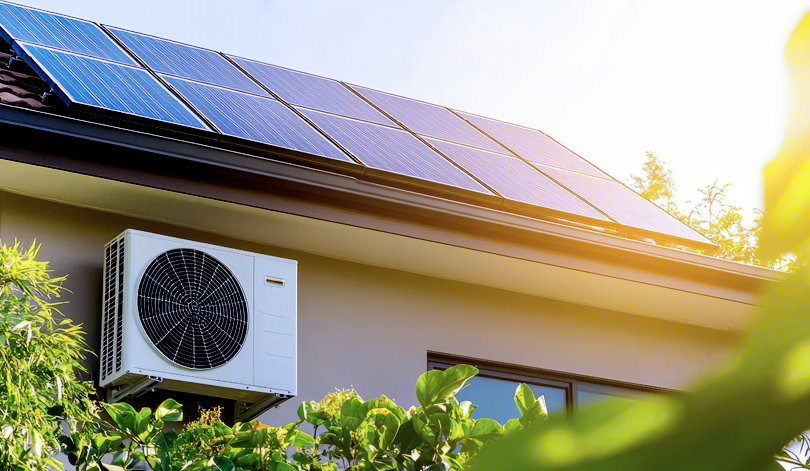
With climate change knocking on our door. Imagine staying cool without stressing over energy use or your carbon footprint. Sounds like a win-win, right?
That’s exactly the kind of solution Renostain is bringing to the table. We’re your Perth neighbours, green guides, and solar engineering crew.
Our mission? To make cooling your home smarter, affordable, and 100% future-ready. From off-grid solar air conditioning unit installs to full hybrid system integrations. We’re powering the climate-friendly revolution.
Solar-Powered Air Conditioner
A solar air conditioner is basically like your traditional AC system. But instead of feeding off the power grid, it draws electricity from solar panels installed on your roof. So energy is generated from sunlight, and your cooling system runs on free renewable power.
So you’re not depleting the planet from its non-renewable energy sources. And you don’t have to worry about the bills either.
These systems are well-suited to the demands of the Australian climate. In solar aircon Australia setups, you’re maximising the abundant sunshine for cooling — especially during the hottest and most power-hungry times of the day.
Can Solar Panels Really Run an Air Conditioner?
Yes, it sounds too good to be true, but the numbers don’t lie. Solar panels can absolutely power an air conditioner effectively.
- A 3.5 kW split system typically consumes 1–1.5 kW per hour while cooling.
- A istandard 6.6 kW solar system on your roof can generate up to 30 kWh per day under optimal conditions — plenty to keep your AC humming throughout the day.
- Energy Capture: Solar panels absorb sunlight and convert it into DC (direct current) electricity.
- Energy Conversion: If your AC runs on AC power (which most do), an inverter changes that DC into usable AC.
- Energy Flow: The system prioritises solar power first. If needed, it can draw from your battery (if installed) or the grid.
- Energy Use: The electricity generated is used to run the components of your AC, such as the evaporator, condenser, compressor and fans.
- Energy Monitoring: Smart inverters allow real-time data tracking, load balancing, and remote control through mobile apps.
- Reduced Electricity Bills: You’re generating your own power during peak daylight hours, right when AC usage spikes.
- Green Credentials: Fewer greenhouse emissions, lower environmental impact, and a cleaner conscience.
- Energy Resilience: With battery backup, you’re protected from blackouts and price hikes.
- Increased Home Value: Energy-efficient homes with solar powered AC units are in high demand.
- Government Incentives: Solar rebates and feed-in tariffs can offset upfront costs significantly.
- Sunny Days: Brightest light and maximum efficiency. Your system runs mostly or entirely on solar with complete electricity independence.
- Overcast Days: Panels still produce power, just less than sunny days. Hybrid systems compensate with grid energy or battery.
- Winter Months: There’s less sun, but also less cooling needed. So, the balance is restored.
- Roof Space & Angle: North-facing, shade-free roofs are ideal for solar panels.
- System Size: Match your AC usage patterns with your panel output.
- Battery or Not?: For full independence, add a battery. For daytime cooling only, solar alone may be enough.
- Inverter Type: Hybrid or smart inverters allow real-time load balancing.
- Smart Features: Some systems integrate with home automation.
- Panels: Rinse with water every 6 months.
- Battery: Check reports and replace after 8–12 years.
- Inverter: Keep dust-free and monitor alerts.
- AC Unit: Service once a year.
- Homes with high daytime AC usage
- Off-grid properties or rural homes
- Green-minded families
- New builds or major renovations
- Apartments without roof access
- Shaded roofs or heritage-listed buildings
During hot Aussie afternoons, when the sun is blazing and your AC is working hardest, solar output is also peaking. That synchronicity is what makes solar and air conditioning such a smart combination.
And for night? Add a battery, and you’ll be free from grid power every time.
How Does Solar Power Air Conditioning Work?
Let’s discuss how this smart tech actually works:
What Types of Solar AC Systems Are There?
Each home has different energy needs, budgets and climates. That’s why solar AC systems come in a variety of setups.
Off-Grid DC System
Run on solar DC power 100%. No grid connection.
Whos It's Best for: Remote locations, rural homes.
Hybrid AC System
Uses solar power during the day and grid at night.
Whos It's Best for: Suburban homes.
Grid-Tied with Battery
Runs on solar power during the day and stores excess energy for evening use.
Whos It's Best for: Energy-conscious families.
Solar Ducted System
One central AC distributes cooling through ducts in the roof vent.
Whos It's Best for: Extremely hot locations.
Portable Solar AC
Compact and mobile with a flexible tube to expel hot air through a window or door.
Best for: Cabins, caravans, and site offices.
Each type has different performance expectations. A hybrid system, for example, provides the best balance between cost, convenience, and energy reliability for urban homeowners.
5 Benefits of Solar Power Air Conditioning
Making the switch to solar powered air conditioning isn’t just good for the planet. It also does wonders for your wallet and your peace of mind. The top benefits include:
With Renostain’s customised solar + AC solutions, you’re maximising every sunbeam.
How Much Can You Save with Solar Air Conditioning?
The potential savings from switching to a solar powered air conditioner are substantial over time. Let’s have a look at numbers.
Scenario
Small Home
Annual Cost (Grid AC): $600
Annual Cost (Solar AC): $250
Estimated Yearly Savings: $350
Medium Home
Annual Cost (Grid AC): $900
Annual Cost (Solar AC): $300
Estimated Yearly Savings: $600
Large Home
Annual Cost (Grid AC): $1200
Annual Cost (Solar AC): $400
Estimated Yearly Savings: $800
Factor in rebates and your payback period shrinks to 3–5 years. After that, it’s nearly all profit. And the best part? You’re not just saving money, but investing in sustainable comfort.
How Do Climate and Weather Affect Solar Aircon Systems?
Here’s what to expect based on different conditions:
Australia’s high solar irradiance makes it one of the best countries for solar air conditioning. Even in southern states, you can generate enough power year-round to make it viable.
What to Consider Before Installing a Solar AC System?
If you decided to get a solar AC for your home, here are the things to keep in mind:
At Renostain, we handle everything from feasibility studies to final wiring.
Maintenance Needs of Solar AC Systems
Who Should Consider Solar-Powered AC?
Best for:
Think twice if:
Renostain offers free consultations to help assess your home.
Switch to Solar Cooling with Renostain
At Renostain, we design and install customised solar powered air conditioning systems built to last. From concept to connection, our experts handle every detail and help turn your home into an energy-efficient powerhouse.
Frequently Asked Questions
Q1: Will solar AC work at night?
Only if you have a battery or backup grid connection.
Q2: What happens on cloudy days?
Panels still produce power, but at a reduced rate.
Q3: Can I add solar to my current AC system?
Yes, many systems can be retrofitted.
Q4: Do I need council approval?
Usually no, but always check local regulations.
Q5: Is Solar AC noisy?
No. Solar panels are silent. AC sounds the same as normal.
Q6: Will it increase my home value?
Yes. Eco-smart homes are highly attractive to buyers.