
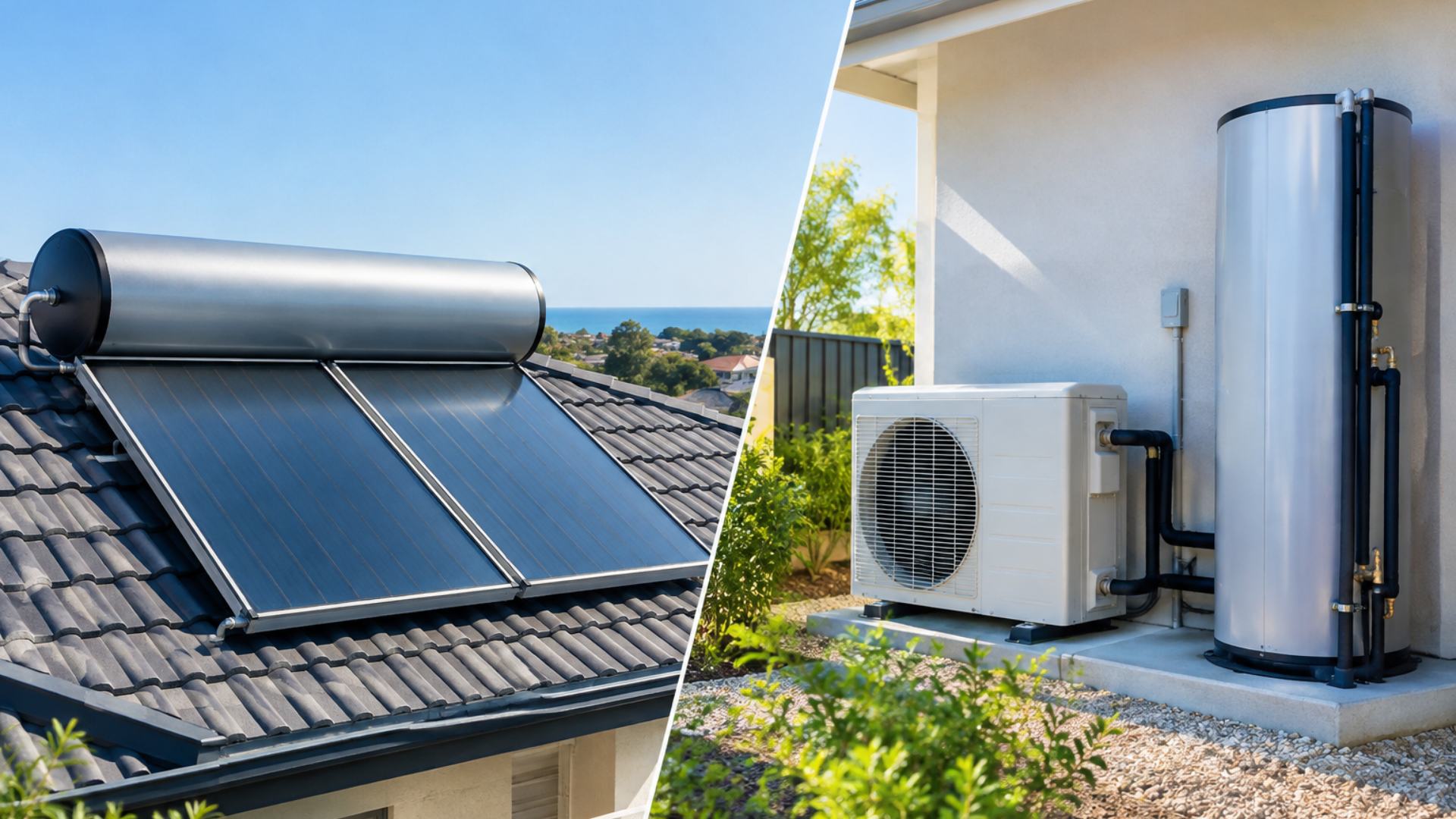
Solar hot water can help reduce the amount of electricity or gas required to heat water, making it an option worth considering for households looking to improve energy efficiency. However, the system's design can influence installation costs, available space and everyday performance.
Two common configurations are roof-mounted systems and split systems. Although both use solar energy to heat water, they arrange their main components differently. Understanding these differences can help you choose a system that suits your property rather than simply selecting the most familiar option.
How Does a Roof-Mounted Solar Hot Water System Work?
A roof-mounted solar hot water system places the solar collectors and storage tank on the roof. The collectors absorb sunlight and transfer heat to the water, which is then stored in the tank until it is needed.
One advantage of this arrangement is its relatively compact plumbing layout. Depending on the system design, the installation may require fewer connections between separate components, potentially simplifying some aspects of the work.
However, the roof must be suitable for supporting the equipment. The combined weight of a water-filled storage tank and its supporting structure can be substantial. Roof condition, structural capacity, weather exposure and access for future servicing should therefore be assessed before installation.
The tank and collectors may also be more visible from the street, which can matter to homeowners concerned about the property's appearance.
What Is a Split-System Solar Hot Water Unit?
A split-system design separates the solar collectors from the storage tank. The collectors are installed on the roof, while the tank is positioned at ground level or in another suitable location.
This arrangement provides greater flexibility when deciding where the main components should go. For example, a property with limited roof space or concerns about supporting a large storage tank may benefit from keeping the tank on the ground.
The trade-off is that the system requires pipework connecting the collectors and tank. The distance between these components, insulation quality, circulation method and overall design can influence heat losses, installation complexity and running performance.
A well-designed split system accounts for these factors to deliver hot water efficiently.
Comparing Efficiency, Installation Costs and Maintenance
Neither system is automatically more efficient in every situation. Performance depends on collector technology, sunlight exposure, household water consumption, storage capacity and how much supplementary heating is required.
Installation costs can also vary according to roof access, structural work, plumbing changes and the equipment selected. A roof-mounted system may involve more demanding roof work, while a split system may require additional pipework and circulation components. Actual costs depend on the property and installation.
Both configurations need appropriate maintenance. Components such as valves, pumps where fitted, collectors, storage tanks and supplementary heating equipment may require inspection or servicing according to the manufacturer's recommendations.
When comparing quotations, look beyond the initial price. Consider expected performance, warranty coverage, service access and the availability of replacement parts.
Which System Is Better for Your Property?
Before choosing a system, consider these practical questions:
Making the Right Long-Term Investment
Solar hot water should be assessed as a complete system rather than a collection of individual components. A suitable design balances energy performance, installation requirements, household needs and ongoing maintenance.
Ask a qualified installer to assess your roof, hot water usage and available installation space before making a decision. Comparing properly specified systems will give you a clearer picture of their expected performance and overall value.
The best option is not necessarily the one with the simplest layout or lowest purchase price. It is the system that fits your property and delivers reliable hot water with practical long-term operating costs.
Two common configurations are roof-mounted systems and split systems. Although both use solar energy to heat water, they arrange their main components differently. Understanding these differences can help you choose a system that suits your property rather than simply selecting the most familiar option.
How Does a Roof-Mounted Solar Hot Water System Work?
A roof-mounted solar hot water system places the solar collectors and storage tank on the roof. The collectors absorb sunlight and transfer heat to the water, which is then stored in the tank until it is needed.
One advantage of this arrangement is its relatively compact plumbing layout. Depending on the system design, the installation may require fewer connections between separate components, potentially simplifying some aspects of the work.
However, the roof must be suitable for supporting the equipment. The combined weight of a water-filled storage tank and its supporting structure can be substantial. Roof condition, structural capacity, weather exposure and access for future servicing should therefore be assessed before installation.
The tank and collectors may also be more visible from the street, which can matter to homeowners concerned about the property's appearance.
What Is a Split-System Solar Hot Water Unit?
A split-system design separates the solar collectors from the storage tank. The collectors are installed on the roof, while the tank is positioned at ground level or in another suitable location.
This arrangement provides greater flexibility when deciding where the main components should go. For example, a property with limited roof space or concerns about supporting a large storage tank may benefit from keeping the tank on the ground.
The trade-off is that the system requires pipework connecting the collectors and tank. The distance between these components, insulation quality, circulation method and overall design can influence heat losses, installation complexity and running performance.
A well-designed split system accounts for these factors to deliver hot water efficiently.
Comparing Efficiency, Installation Costs and Maintenance
Neither system is automatically more efficient in every situation. Performance depends on collector technology, sunlight exposure, household water consumption, storage capacity and how much supplementary heating is required.
Installation costs can also vary according to roof access, structural work, plumbing changes and the equipment selected. A roof-mounted system may involve more demanding roof work, while a split system may require additional pipework and circulation components. Actual costs depend on the property and installation.
Both configurations need appropriate maintenance. Components such as valves, pumps where fitted, collectors, storage tanks and supplementary heating equipment may require inspection or servicing according to the manufacturer's recommendations.
When comparing quotations, look beyond the initial price. Consider expected performance, warranty coverage, service access and the availability of replacement parts.
Which System Is Better for Your Property?
Before choosing a system, consider these practical questions:
- Roof suitability: Can the roof safely accommodate the collectors and, if applicable, the storage tank?
- Available space: Is there a suitable ground-level location for a separate tank?
- Household demand: How many people regularly use hot water, and when is demand highest?
- Installation complexity: Will plumbing changes, roof access or structural improvements be required?
- Long-term servicing: Can the equipment be accessed safely for maintenance?
Making the Right Long-Term Investment
Solar hot water should be assessed as a complete system rather than a collection of individual components. A suitable design balances energy performance, installation requirements, household needs and ongoing maintenance.
Ask a qualified installer to assess your roof, hot water usage and available installation space before making a decision. Comparing properly specified systems will give you a clearer picture of their expected performance and overall value.
The best option is not necessarily the one with the simplest layout or lowest purchase price. It is the system that fits your property and delivers reliable hot water with practical long-term operating costs.