
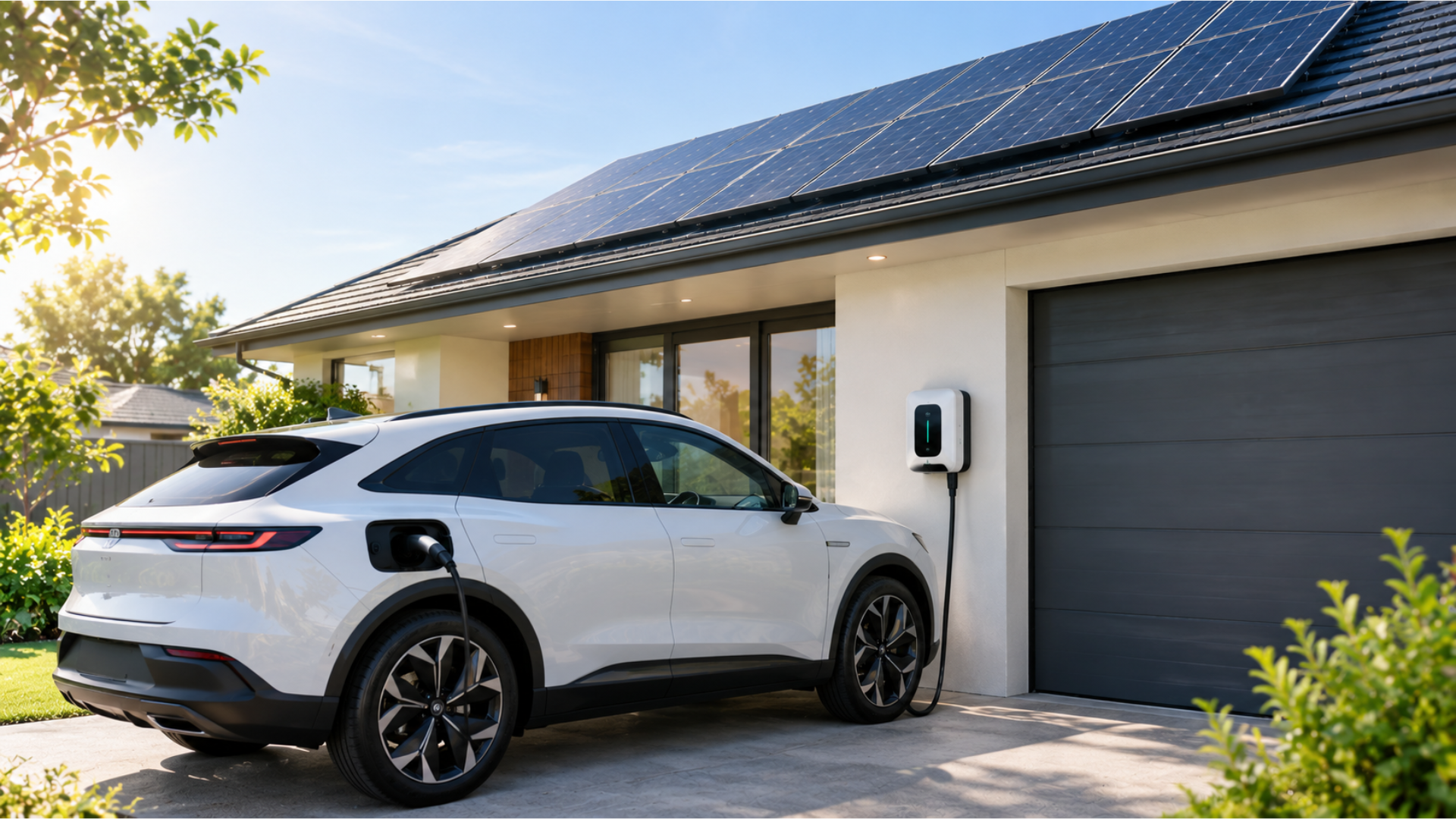
Smart EV Charging: Use Rooftop Solar to Charge Your Car
If you already have rooftop solar, charging an electric vehicle at home creates an opportunity to use more of the electricity your panels generate.
However, solar production and vehicle charging do not always happen at the same time. Your panels may produce their highest output around the middle of the day, while your car is parked at work or your household is using electricity for other purposes.
This timing mismatch is one reason smart EV charging can be useful.
A compatible charging system can help coordinate vehicle charging with solar generation, household consumption and available electrical capacity. The goal is not necessarily to charge using solar electricity alone at all times, but to make better use of the energy available when the car is connected.
Why Solar and EV Charging Do Not Always Match
Solar panels generate electricity according to sunlight, weather, shading and system performance. Household demand also changes throughout the day.
When solar production exceeds the home's consumption, some electricity may be exported to the grid. When demand exceeds solar generation, the property may import electricity.
An EV adds another substantial electrical load to this picture.
If the vehicle is connected during periods of solar surplus, some of that electricity may be used for charging. If the vehicle is away during daylight hours, the opportunity may be more limited.
Before buying a smart charger, consider when your car is usually at home, how much energy you need for daily driving and whether your solar system regularly exports electricity during those hours.
Three Ways to Make Better Use of Solar Electricity
1. Schedule Charging Around Your Routine
The simplest option is to schedule charging for times when the vehicle is parked at home and solar generation is likely to be available.
For example, someone who works from home several days a week may be able to charge during daylight hours. Someone who commutes every weekday may have fewer opportunities.
Scheduling is useful, but it does not automatically respond to changes in solar production or household demand.
2. Use Solar-Surplus Charging
Some smart EV chargers can monitor electricity flows and adjust charging based on available solar surplus.
Depending on the equipment, the charger may increase charging when surplus generation rises and reduce or pause it when household demand increases.
This can help direct more available solar electricity into the vehicle. However, the feature depends on the charger, monitoring equipment, inverter compatibility and supported operating modes.
Confirm how the specific product behaves when clouds reduce generation or other appliances switch on.
3. Coordinate EV Charging With Household Demand
An EV charger operates alongside other household loads, including air conditioning, electric cooking and water heating.
Compatible load management can adjust charging power in response to the property's total demand. This may help keep demand within configured limits and make better use of available electrical capacity.
It is particularly worth discussing where the property has limited spare capacity or may add other high-power equipment in the future.
Load management does not replace the need for a suitably designed electrical installation.
What Happens When Clouds Roll In?
Solar generation is not constant. A cloud passing over the roof can reduce the amount of electricity available to the household and EV charger.
A compatible solar-aware charger may reduce charging power, pause charging or use grid electricity, depending on its features and settings.
Some chargers also have minimum operating-current requirements or specific restrictions on solar charging modes.
If your goal is to minimise grid imports while charging, understand exactly how the selected charger responds when available solar energy changes.
It is also worth considering whether frequent changes in charging power suit your vehicle and everyday driving routine.
How Much Solar Energy Does Your Car Need?
The answer depends on how far you drive, the efficiency of your vehicle and the energy lost during charging.
For a simple illustration, suppose an EV uses 16 kWh per 100 km. A daily drive of 40 km would require approximately 6.4 kWh for driving, before accounting for charging losses.
The calculation is:
40 km ÷ 100 km × 16 kWh = 6.4 kWh
This is an example rather than a prediction for every vehicle. Actual consumption varies with the model, driving conditions, speed, weather and use of heating or air conditioning.
Once you estimate your daily charging requirement, compare it with the solar electricity available while the vehicle is parked at home.
A household that exports substantial solar electricity during the day may have a useful opportunity for solar charging. A household that consumes nearly all its solar generation already may have less surplus available.
Is Charging With Solar Always the Cheapest Option?
Not necessarily. The result depends on your electricity tariff, feed-in arrangements, charging schedule and the amount of solar electricity available.
Using surplus solar for EV charging can reduce the need to buy electricity from the grid. However, that electricity would otherwise potentially have been exported for a feed-in credit.
For a realistic comparison, consider:
- The amount of solar electricity available: When the car is connected.
- The electricity rate: What you pay for grid imports.
- Feed-in credits: The value of any credit you forgo.
- Charging requirements: How much energy the vehicle needs.
- Equipment costs: The cost of any additional charger or energy management equipment.
The most suitable charging schedule is the one that works with your actual energy use and costs, rather than assuming that daytime charging is always cheaper.
Not every product includes all these features. Check the manufacturer's specifications and installation requirements before choosing.
What If Your Car Is Usually Away During the Day?
Smart charging can still be useful, but the expected solar benefit may be smaller if the vehicle is rarely connected when generation is available.
You could compare charging at home during available daylight hours with charging at other times under your electricity plan. A home battery may also change how energy is used across the day, but adding a battery solely to charge an EV should be evaluated carefully against the full cost and expected energy flows.
In some households, a simple charging schedule is sufficient. Others may benefit from a charger that dynamically responds to solar production and household demand.
The right choice depends on your routine and the system you already have.
Bring Your Solar and EV Systems Together
A smart EV charger should be selected around your vehicle, solar generation, electrical capacity and charging habits.
Renostain can help assess your property's electrical requirements and explore EV charging options that integrate with your wider energy system.
Want to use more of your rooftop solar for EV charging? Contact Renostain to discuss a solution suited to your property and driving routine.
However, solar production and vehicle charging do not always happen at the same time. Your panels may produce their highest output around the middle of the day, while your car is parked at work or your household is using electricity for other purposes.
This timing mismatch is one reason smart EV charging can be useful.
A compatible charging system can help coordinate vehicle charging with solar generation, household consumption and available electrical capacity. The goal is not necessarily to charge using solar electricity alone at all times, but to make better use of the energy available when the car is connected.
Why Solar and EV Charging Do Not Always Match
Solar panels generate electricity according to sunlight, weather, shading and system performance. Household demand also changes throughout the day.
When solar production exceeds the home's consumption, some electricity may be exported to the grid. When demand exceeds solar generation, the property may import electricity.
An EV adds another substantial electrical load to this picture.
If the vehicle is connected during periods of solar surplus, some of that electricity may be used for charging. If the vehicle is away during daylight hours, the opportunity may be more limited.
Before buying a smart charger, consider when your car is usually at home, how much energy you need for daily driving and whether your solar system regularly exports electricity during those hours.
Three Ways to Make Better Use of Solar Electricity
1. Schedule Charging Around Your Routine
The simplest option is to schedule charging for times when the vehicle is parked at home and solar generation is likely to be available.
For example, someone who works from home several days a week may be able to charge during daylight hours. Someone who commutes every weekday may have fewer opportunities.
Scheduling is useful, but it does not automatically respond to changes in solar production or household demand.
2. Use Solar-Surplus Charging
Some smart EV chargers can monitor electricity flows and adjust charging based on available solar surplus.
Depending on the equipment, the charger may increase charging when surplus generation rises and reduce or pause it when household demand increases.
This can help direct more available solar electricity into the vehicle. However, the feature depends on the charger, monitoring equipment, inverter compatibility and supported operating modes.
Confirm how the specific product behaves when clouds reduce generation or other appliances switch on.
3. Coordinate EV Charging With Household Demand
An EV charger operates alongside other household loads, including air conditioning, electric cooking and water heating.
Compatible load management can adjust charging power in response to the property's total demand. This may help keep demand within configured limits and make better use of available electrical capacity.
It is particularly worth discussing where the property has limited spare capacity or may add other high-power equipment in the future.
Load management does not replace the need for a suitably designed electrical installation.
What Happens When Clouds Roll In?
Solar generation is not constant. A cloud passing over the roof can reduce the amount of electricity available to the household and EV charger.
A compatible solar-aware charger may reduce charging power, pause charging or use grid electricity, depending on its features and settings.
Some chargers also have minimum operating-current requirements or specific restrictions on solar charging modes.
If your goal is to minimise grid imports while charging, understand exactly how the selected charger responds when available solar energy changes.
It is also worth considering whether frequent changes in charging power suit your vehicle and everyday driving routine.
How Much Solar Energy Does Your Car Need?
The answer depends on how far you drive, the efficiency of your vehicle and the energy lost during charging.
For a simple illustration, suppose an EV uses 16 kWh per 100 km. A daily drive of 40 km would require approximately 6.4 kWh for driving, before accounting for charging losses.
The calculation is:
40 km ÷ 100 km × 16 kWh = 6.4 kWh
This is an example rather than a prediction for every vehicle. Actual consumption varies with the model, driving conditions, speed, weather and use of heating or air conditioning.
Once you estimate your daily charging requirement, compare it with the solar electricity available while the vehicle is parked at home.
A household that exports substantial solar electricity during the day may have a useful opportunity for solar charging. A household that consumes nearly all its solar generation already may have less surplus available.
Is Charging With Solar Always the Cheapest Option?
Not necessarily. The result depends on your electricity tariff, feed-in arrangements, charging schedule and the amount of solar electricity available.
Using surplus solar for EV charging can reduce the need to buy electricity from the grid. However, that electricity would otherwise potentially have been exported for a feed-in credit.
For a realistic comparison, consider:
- The amount of solar electricity available: When the car is connected.
- The electricity rate: What you pay for grid imports.
- Feed-in credits: The value of any credit you forgo.
- Charging requirements: How much energy the vehicle needs.
- Equipment costs: The cost of any additional charger or energy management equipment.
The most suitable charging schedule is the one that works with your actual energy use and costs, rather than assuming that daytime charging is always cheaper.
Not every product includes all these features. Check the manufacturer's specifications and installation requirements before choosing.
What If Your Car Is Usually Away During the Day?
Smart charging can still be useful, but the expected solar benefit may be smaller if the vehicle is rarely connected when generation is available.
You could compare charging at home during available daylight hours with charging at other times under your electricity plan. A home battery may also change how energy is used across the day, but adding a battery solely to charge an EV should be evaluated carefully against the full cost and expected energy flows.
In some households, a simple charging schedule is sufficient. Others may benefit from a charger that dynamically responds to solar production and household demand.
The right choice depends on your routine and the system you already have.
Bring Your Solar and EV Systems Together
A smart EV charger should be selected around your vehicle, solar generation, electrical capacity and charging habits.
Renostain can help assess your property's electrical requirements and explore EV charging options that integrate with your wider energy system.
Want to use more of your rooftop solar for EV charging? Contact Renostain to discuss a solution suited to your property and driving routine.