
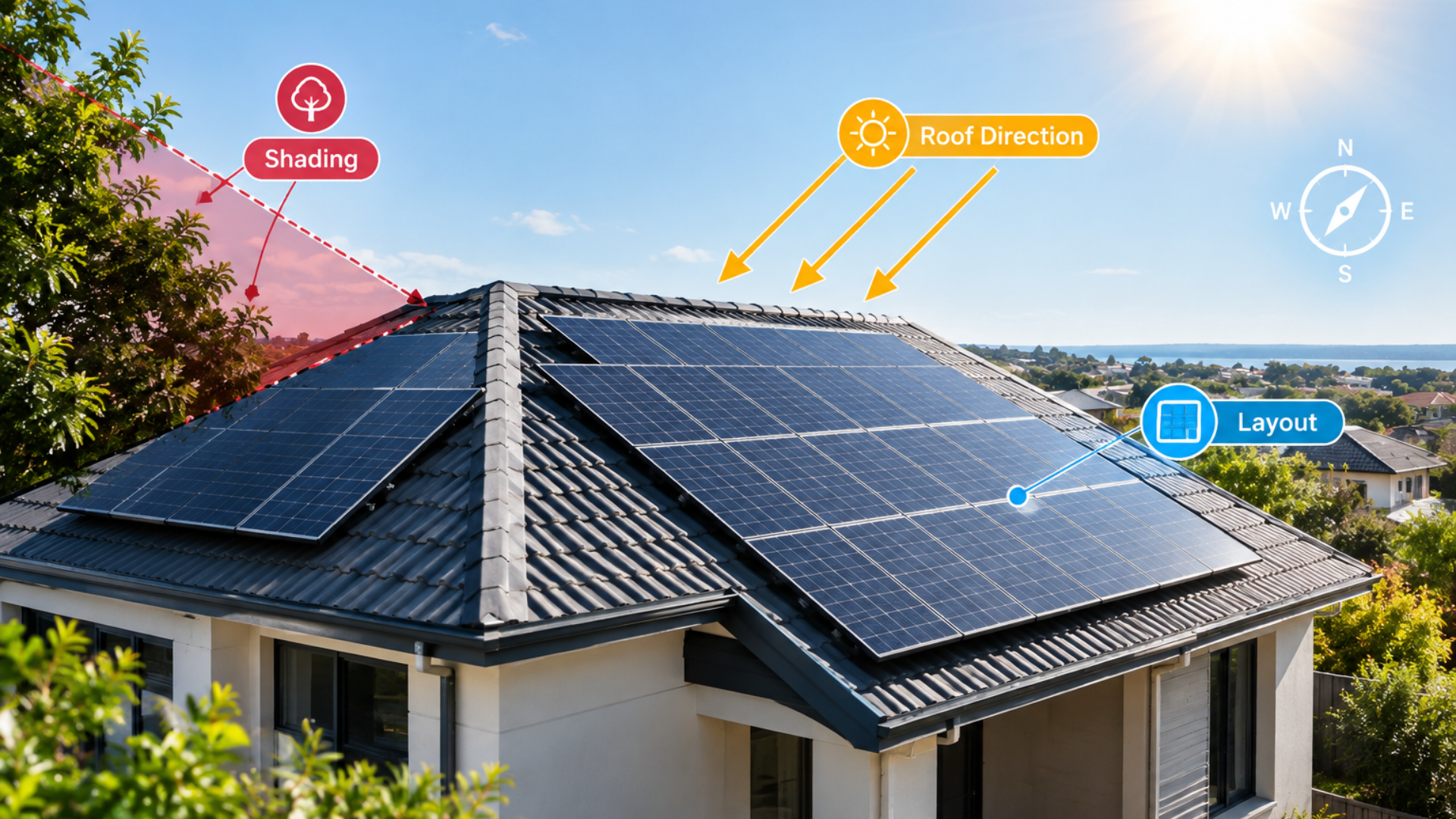
Solar panels are designed to capture sunlight and convert it into electricity, but their performance depends heavily on where and how they are installed.
Two properties with similar-sized solar systems can produce different amounts of electricity because their roofs receive different levels of sunlight throughout the day. Even on the same property, one section of the roof may be considerably more suitable than another.
Understanding the key design factors can help homeowners make informed decisions before installation and avoid overlooking conditions that could affect their system's performance.
Roof Orientation: Which Direction Should Panels Face?
Roof orientation influences when solar panels receive direct sunlight and how electricity generation is distributed throughout the day.
In the Southern Hemisphere, north-facing panels often provide strong overall solar exposure. However, this does not mean that east- or west-facing roof sections should automatically be excluded.
East-facing panels generally favour morning generation, while west-facing panels can contribute more electricity later in the afternoon. This can be useful for households that consume more power during particular periods.
The best arrangement depends on the property's roof geometry, local climate, seasonal sunlight and electricity consumption. A design that prioritises total generation may differ from one intended to maximise electricity production during specific usage periods.
Roof Pitch and Available Space
Roof pitch affects the angle at which sunlight reaches the panels. A suitable angle can support effective generation, but the ideal arrangement varies with location, roof orientation and system design.
The available roof area is equally important. Chimneys, skylights, vents and other structures may restrict panel placement or create additional shading.
Designers must also consider mounting arrangements, roof condition, access requirements and any applicable clearances. A roof that appears large enough at first glance may accommodate fewer panels than expected once these factors are taken into account.
How Shading Affects Solar Performance
Shading is one of the most important factors to assess before installing solar panels.
Trees, neighbouring buildings, chimneys and roof structures can cast shadows across an array. The amount of energy lost depends on how much of the system is shaded, when the shading occurs and how the panels are electrically connected.
For example, a tree may cast a shadow across the roof during the morning but leave the panels unobstructed for the rest of the day. In another property, a nearby building may create longer periods of shading during winter.
These patterns can be difficult to judge from a single site visit. A thorough assessment considers the movement of shadows throughout the day and across different seasons.
Module-level power electronics or carefully planned string configurations may help manage some shading effects. However, they do not eliminate all losses, so avoiding significant shading remains an important design objective.
Why Panel Layout Matters
The arrangement of panels affects more than the total number installed. It can influence electrical configuration, wiring complexity, installation costs and future maintenance.
A well-planned layout groups panels according to relevant roof conditions and electrical requirements. Where different roof sections receive sunlight at different times, the designer may need to consider how the panels should be connected to the inverter or other system components.
Panel placement should also account for safe access and applicable installation requirements. Filling every available section of the roof is not necessarily the best approach if the additional panels experience significant shading or create unnecessary installation complications.
Match Solar Generation to Household Electricity Use
Solar design should reflect how electricity is used, not just how much the property consumes overall.
A household that operates appliances during daylight may be able to use a larger share of its solar generation directly. Another household may use most of its electricity in the evening, making battery storage worth considering alongside the solar system.
For example, a west-facing array may help increase generation later in the day, while an east-facing array may better support morning demand. The most suitable option depends on the property's actual usage patterns and the relative value of generating electricity at different times.
Choosing an Appropriate Inverter and System Size
The inverter converts the electricity generated by solar panels into usable alternating current for the property. Its capacity and compatibility with the panels influence how the system operates.
System designers need to consider panel output, inverter specifications, roof conditions, expected generation and applicable electrical requirements. They should also account for future plans, such as battery installation or additional electrical equipment, where relevant.
Choosing components that work well together is more important than selecting individual products based on headline specifications alone.
What to Check Before Installation
Before committing to a design, ask your installer to explain:
A well-designed solar system balances available roof space, sunlight exposure, electrical configuration and household demand.
Although the highest possible panel count may appear attractive, a carefully planned array can provide better practical results by making sensible use of the available roof and reducing avoidable performance losses.
A site-specific assessment can help establish realistic generation expectations and identify the most appropriate layout before installation begins.
Two properties with similar-sized solar systems can produce different amounts of electricity because their roofs receive different levels of sunlight throughout the day. Even on the same property, one section of the roof may be considerably more suitable than another.
Understanding the key design factors can help homeowners make informed decisions before installation and avoid overlooking conditions that could affect their system's performance.
Roof Orientation: Which Direction Should Panels Face?
Roof orientation influences when solar panels receive direct sunlight and how electricity generation is distributed throughout the day.
In the Southern Hemisphere, north-facing panels often provide strong overall solar exposure. However, this does not mean that east- or west-facing roof sections should automatically be excluded.
East-facing panels generally favour morning generation, while west-facing panels can contribute more electricity later in the afternoon. This can be useful for households that consume more power during particular periods.
The best arrangement depends on the property's roof geometry, local climate, seasonal sunlight and electricity consumption. A design that prioritises total generation may differ from one intended to maximise electricity production during specific usage periods.
Roof Pitch and Available Space
Roof pitch affects the angle at which sunlight reaches the panels. A suitable angle can support effective generation, but the ideal arrangement varies with location, roof orientation and system design.
The available roof area is equally important. Chimneys, skylights, vents and other structures may restrict panel placement or create additional shading.
Designers must also consider mounting arrangements, roof condition, access requirements and any applicable clearances. A roof that appears large enough at first glance may accommodate fewer panels than expected once these factors are taken into account.
How Shading Affects Solar Performance
Shading is one of the most important factors to assess before installing solar panels.
Trees, neighbouring buildings, chimneys and roof structures can cast shadows across an array. The amount of energy lost depends on how much of the system is shaded, when the shading occurs and how the panels are electrically connected.
For example, a tree may cast a shadow across the roof during the morning but leave the panels unobstructed for the rest of the day. In another property, a nearby building may create longer periods of shading during winter.
These patterns can be difficult to judge from a single site visit. A thorough assessment considers the movement of shadows throughout the day and across different seasons.
Module-level power electronics or carefully planned string configurations may help manage some shading effects. However, they do not eliminate all losses, so avoiding significant shading remains an important design objective.
Why Panel Layout Matters
The arrangement of panels affects more than the total number installed. It can influence electrical configuration, wiring complexity, installation costs and future maintenance.
A well-planned layout groups panels according to relevant roof conditions and electrical requirements. Where different roof sections receive sunlight at different times, the designer may need to consider how the panels should be connected to the inverter or other system components.
Panel placement should also account for safe access and applicable installation requirements. Filling every available section of the roof is not necessarily the best approach if the additional panels experience significant shading or create unnecessary installation complications.
Match Solar Generation to Household Electricity Use
Solar design should reflect how electricity is used, not just how much the property consumes overall.
A household that operates appliances during daylight may be able to use a larger share of its solar generation directly. Another household may use most of its electricity in the evening, making battery storage worth considering alongside the solar system.
For example, a west-facing array may help increase generation later in the day, while an east-facing array may better support morning demand. The most suitable option depends on the property's actual usage patterns and the relative value of generating electricity at different times.
Choosing an Appropriate Inverter and System Size
The inverter converts the electricity generated by solar panels into usable alternating current for the property. Its capacity and compatibility with the panels influence how the system operates.
System designers need to consider panel output, inverter specifications, roof conditions, expected generation and applicable electrical requirements. They should also account for future plans, such as battery installation or additional electrical equipment, where relevant.
Choosing components that work well together is more important than selecting individual products based on headline specifications alone.
What to Check Before Installation
Before committing to a design, ask your installer to explain:
- How roof orientation and pitch affect expected generation.
- Whether trees or nearby structures are likely to cause shading.
- How the proposed panel layout uses the available roof area.
- Whether the inverter is suitable for the planned array.
- How the design relates to your household electricity consumption.
- What assumptions are being used to estimate energy production.
A well-designed solar system balances available roof space, sunlight exposure, electrical configuration and household demand.
Although the highest possible panel count may appear attractive, a carefully planned array can provide better practical results by making sensible use of the available roof and reducing avoidable performance losses.
A site-specific assessment can help establish realistic generation expectations and identify the most appropriate layout before installation begins.