Australia has become one of the world's leading markets for rooftop solar, with small-scale solar generation continuing
to grow. In 2024, solar accounted for 18% of Australia's total electricity generation, while small-scale solar generation
grew by 15%.
For homeowners and businesses, solar energy can provide an opportunity to generate electricity on-site and make better use of renewable energy. However, choosing a solar system is about more than simply selecting panels.
How Does Solar Energy Work?
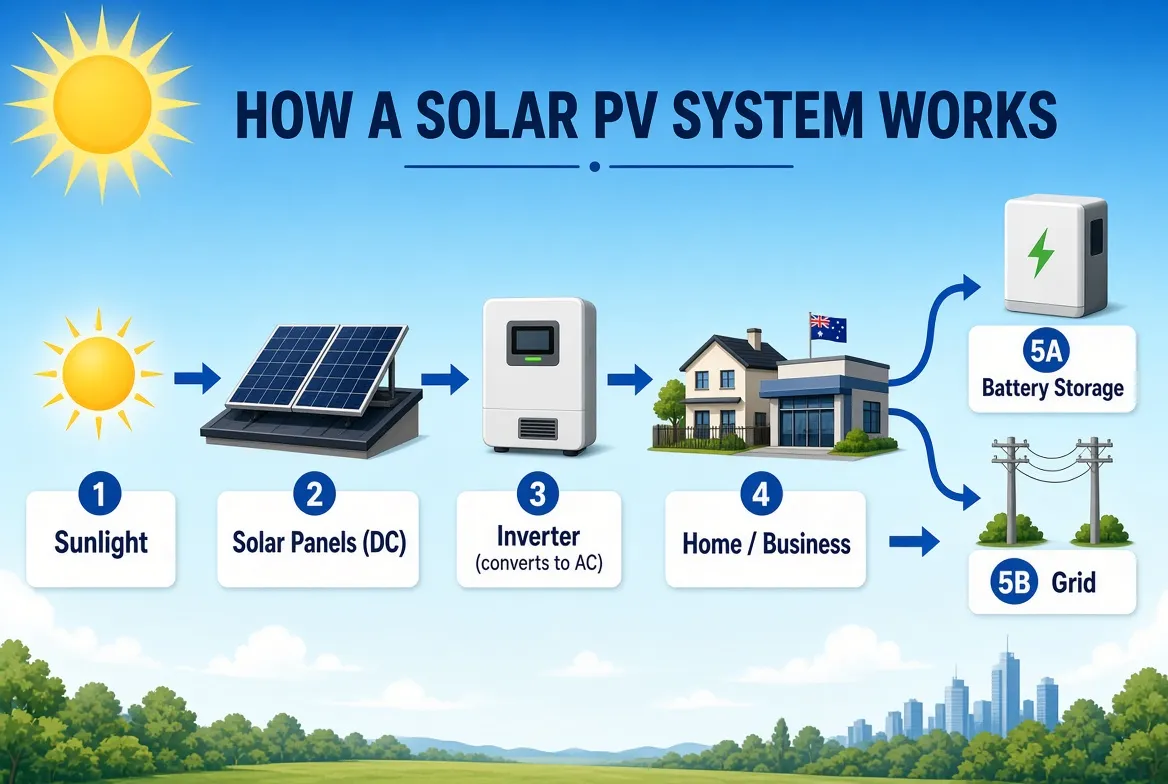
Solar photovoltaic (PV) systems convert sunlight into electricity. Solar panels generate DC electricity, which is then converted into usable AC electricity through an inverter.
The electricity can be used to power equipment and appliances on-site, while excess generation may be exported to the grid depending on the system and connection arrangements.
The Australian Government notes that rooftop solar can help reduce electricity costs and may also support other energy needs such as EV charging.
What Should Be Considered Before Installing Solar?
A suitable system should reflect the property's actual energy requirements. Important considerations include:
• Current electricity consumption
• Future energy requirements
• Available roof or installation area
• System orientation and site conditions
• Existing electrical infrastructure
• Expected daytime energy use
• Battery storage requirements
• Potential future loads such as EV charging
• Grid connection requirements
Future electricity demand is particularly important. The Australian Government recommends considering changes such as increased air-conditioning use, electric hot water, new appliances, building extensions or EVs when sizing a solar system.
Why System Design Matters
A solar system should be designed around the property rather than based solely on panel quantity.
For larger or more complex projects, electrical design and feasibility assessment can help determine whether the proposed system is suitable for the site's energy requirements and infrastructure.
This is where a broader energy approach can be valuable. Solar can potentially work alongside battery storage, energy management, EV charging and other technologies rather than being treated as an isolated system.
Every property has different energy requirements. Contact Renostain to discuss your solar and renewable energy requirements.
Solar Energy Solutions with Renostain As an ECA WA-accredited provider of advanced energy and electrical solutions, Renostain can support customers looking at solar and renewable energy solutions.
Thinking About Solar?
For homeowners and businesses, solar energy can provide an opportunity to generate electricity on-site and make better use of renewable energy. However, choosing a solar system is about more than simply selecting panels.
How Does Solar Energy Work?
Solar photovoltaic (PV) systems convert sunlight into electricity. Solar panels generate DC electricity, which is then converted into usable AC electricity through an inverter.
The electricity can be used to power equipment and appliances on-site, while excess generation may be exported to the grid depending on the system and connection arrangements.
The Australian Government notes that rooftop solar can help reduce electricity costs and may also support other energy needs such as EV charging.
What Should Be Considered Before Installing Solar?
A suitable system should reflect the property's actual energy requirements. Important considerations include:
• Current electricity consumption
• Future energy requirements
• Available roof or installation area
• System orientation and site conditions
• Existing electrical infrastructure
• Expected daytime energy use
• Battery storage requirements
• Potential future loads such as EV charging
• Grid connection requirements
Future electricity demand is particularly important. The Australian Government recommends considering changes such as increased air-conditioning use, electric hot water, new appliances, building extensions or EVs when sizing a solar system.
Why System Design Matters
A solar system should be designed around the property rather than based solely on panel quantity.
For larger or more complex projects, electrical design and feasibility assessment can help determine whether the proposed system is suitable for the site's energy requirements and infrastructure.
This is where a broader energy approach can be valuable. Solar can potentially work alongside battery storage, energy management, EV charging and other technologies rather than being treated as an isolated system.
Every property has different energy requirements. Contact Renostain to discuss your solar and renewable energy requirements.
Solar Energy Solutions with Renostain As an ECA WA-accredited provider of advanced energy and electrical solutions, Renostain can support customers looking at solar and renewable energy solutions.
Thinking About Solar?